Fragmented payments complicate Southeast Asia's digital commerce
Mastercard says connecting cards, wallets and QR networks is the next priority.
Southeast Asia's fragmented payment systems are creating challenges for cross-border commerce, as businesses navigate multiple digital payment networks despite rapid adoption across the region, according to Mastercard.
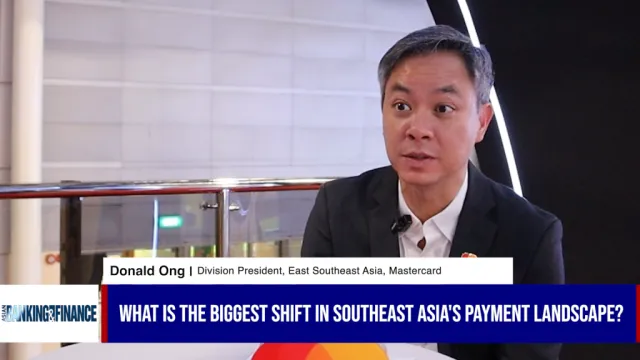
Donald Ong, division president for East Southeast Asia at Mastercard, said cards, digital wallets, real-time payments and QR schemes have expanded alongside one another, but improving connectivity between these systems is now the priority.
"The next challenge isn't about yet another way to pay. The opportunity is to connect these ecosystems seamlessly and deliver better payment experiences," Ong said.
Mastercard's Pay Local initiative allows cardholders to link their Mastercard credentials to local digital wallets and pay through QR codes at participating merchants.
Ong said the initiative could expand payment acceptance for international visitors whilst enabling businesses to reach a broader customer base.
The company is also looking to expand contactless transit payments across Southeast Asia, allowing travellers to use familiar payment instruments rather than navigate local ticketing systems.
For micro and small businesses, however, accepting digital payments can still involve additional hardware costs and operational complexity.
To address this, Mastercard announced Mastercard Accept at the Singapore FinTech Festival, enabling debit and prepaid cardholders to use their cards as payment acceptance instruments.
Ong said the company plans to scale the initiative across Southeast Asia with its partners.
Beyond interoperability, scams remain a major obstacle to building trust in digital payments.
Ong warned that fraudulent transactions are difficult to intercept because victims often authorise payments themselves, allowing funds to move rapidly across multiple accounts, wallets and borders.
"In scams, most of the time, it's genuinely authorised by the account holder, and once the money leaves the account, it gets dispersed across multiple accounts, multiple wallets, and across borders," he said.
He stressed that faster detection, intervention and tracing require coordination between financial institutions, industries and government agencies.

















 Read Here
 Advertise
 Sign Up








Commentary
Can governance keep pace with smarter technology?
How Asia-Pacific banks can escape the cross-border payments ‘commodity trap’
Cheap intelligence, scarce judgment: The new model for Asian institutional investing
The next competitive advantage in banking AI is explainability, not automation