Mastercard targets SME platform complexity as AI expands
Businesses already use five to six platforms on average, raising the need for integrated payment systems and stronger controls over AI agents.
Small and medium-sized enterprises (SMEs) face growing technology complexity as artificial intelligence adds to the number of platforms they use, increasing demand for integrated systems and stronger payment controls, according to Mastercard.
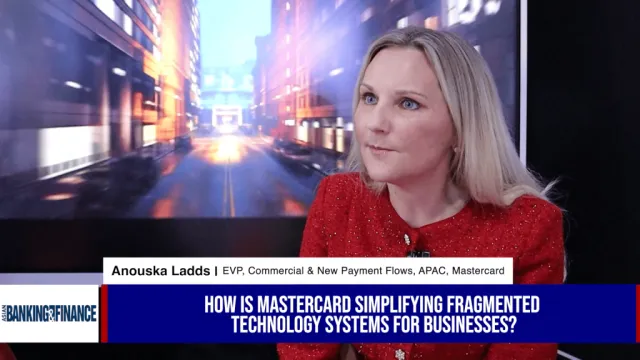
Anouska Ladds, executive vice president of Commercial & New Payment Flows, Asia-Pacific, at Mastercard, said SMEs already rely on multiple platforms to manage business operations, with AI and agentic technologies expected to increase that number.
"On average, an SME will have about five or six different platforms," Ladds said.
To address this fragmentation, Mastercard has introduced offerings such as its virtual CFO and virtual C-suite, which consolidate business data and insights to help SMEs identify operational priorities.
For larger companies, Ladds said the focus should be on embedding payments into existing workflows rather than introducing additional systems that increase complexity.
However, the growing use of autonomous AI agents also raises questions about spending authority and financial oversight.
"You still need that human touch and human intervention to tell the agents what to do," Ladds said.
She identified spending limits and predefined controls as essential safeguards before businesses allow AI agents to execute tasks.
Mastercard's In Control product, for example, allows businesses to establish spending limits and other restrictions, helping maintain oversight as automation expands.
Ladds stressed that controls established before an agent acts would become increasingly important in building confidence amongst corporate finance executives.
The integration challenge extends to cross-border payments, particularly in Asia-Pacific, where advanced domestic payment networks operate alongside different platforms and systems across markets.

















 Read Here
 Advertise
 Sign Up








Commentary
Can governance keep pace with smarter technology?
How Asia-Pacific banks can escape the cross-border payments ‘commodity trap’
Cheap intelligence, scarce judgment: The new model for Asian institutional investing
The next competitive advantage in banking AI is explainability, not automation