Poor governance raises barriers to emerging-market investment
GFTN says investors are weighing governance standards, valuations and geopolitical risks.
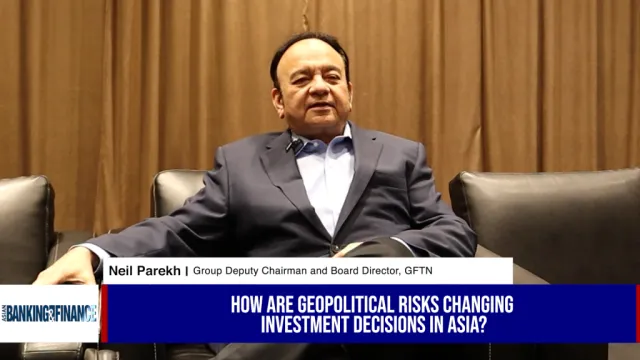
Weak corporate governance could undermine emerging markets' ability to attract international capital as investors become more selective about valuations, geopolitical risks and exposure to artificial intelligence disruption, according to the Global Finance & Technology Network (GFTN).
Neil Parekh, group deputy chairman and board director at GFTN, said governance remains a critical consideration for international investors assessing opportunities across multiple jurisdictions.
He explained that poor governance increases the time and resources required to monitor portfolio investments, making such markets less attractive to investors managing diversified portfolios.
"If you get into a jurisdiction with poor governance and a company with poor governance, you're going to spend a disproportionate amount of time," he said.
Beyond governance, geopolitical developments are carrying greater weight in investment decisions as countries and companies reassess their international relationships.
Parekh said investors must also scrutinise ambitious growth projections and valuations, particularly where company forecasts depend on rapid expansion whilst maintaining profit margins.
AI disruption presents another risk, with existing business models potentially facing significant changes as automation advances.
He cited software companies facing investor concerns over AI competition and questioned whether healthcare research businesses could experience similar disruption.
Interest rate volatility and inflation expectations, partly influenced by geopolitical developments and commodity prices, add further uncertainty.
For emerging economies seeking international capital, Parekh emphasised that governance must be accompanied by economic growth, openness to innovation and the capacity to adopt new technologies.




















 Read Here
 Advertise
 Sign Up








Commentary
Can governance keep pace with smarter technology?
How Asia-Pacific banks can escape the cross-border payments ‘commodity trap’
Cheap intelligence, scarce judgment: The new model for Asian institutional investing
The next competitive advantage in banking AI is explainability, not automation