
Japan banks turn to stablecoins to retain deposits
Megabanks plan joint digital-currency transactions by March 2027.
Japan's three biggest banking groups are turning to stablecoins to prevent deposits and payment activity from shifting to nonbank issuers as digital assets gain wider use.
“When three of Japan's largest banks agree to do this jointly rather than compete, that tells you their priority is shared infrastructure,” Michael Benz, head of the Asia-Pacific region at AMINA Group AG, said in an emailed reply to questions. “Their real competition is with the nonbank issuers.”
He said stablecoins issued by nonbank companies could pull deposits and liquidity out of the banking sector. By issuing their own stablecoins, banks can keep money circulating within their networks rather than losing corporate clients to external platforms.
Mitsubishi UFJ Financial Group, Inc., Mizuho Financial Group, Inc., and Sumitomo Mitsui Banking Corporation announced on 10 June plans to conduct commercial transactions using a stablecoin by March 2027.
The three lenders have formed a voluntary council to develop governance standards, operating frameworks, and other requirements for live stablecoin transactions. They intend to act as joint settlement institutions for the stablecoin.
Yuka Narita, group head of the business development group in the digital strategy department at Sumitomo Mitsui Banking Corporation, said the partnership could lead to shared infrastructure that supports a wider range of users and transactions.
“While initial discussions have focused primarily on corporate use cases, a broad range of potential applications will continue to be explored over time,” Narita said in an emailed reply to questions.
Potential applications include cross-border payments, digital-asset settlement, and programmable payments.
Narita said the banks might consider bringing more financial institutions and industry participants into the initiative.
The project builds on Sumitomo Mitsui’s earlier work in the sector. In April 2025, it signed a memorandum of understanding with Fireblocks Ltd., Ava Labs, Inc., and TIS, Inc. to develop a framework for stablecoin issuance and circulation.
“The insights gained through these efforts, including in areas such as blockchain infrastructure, security, and operational processes, are expected to contribute to the discussions within this joint initiative,” Narita said.
Cross-border payments remain the most compelling use case for stablecoins, according to Benz.
Traditional international payment systems often require multiple intermediaries and can take days to settle transactions. Stablecoins can complete transfers within minutes, he said.
Benz said the technology could benefit the three megabanks' combined base of about 300,000 corporate clients, particularly companies making cross-border payments.
He was less convinced about the case for domestic retail transactions.
“If I'm buying a coffee in Tokyo and the existing payment system works, which it does, a stablecoin doesn't solve a problem the consumer actually has,” Benz said.
Japan joins other Asian markets moving to establish stablecoin frameworks and products.
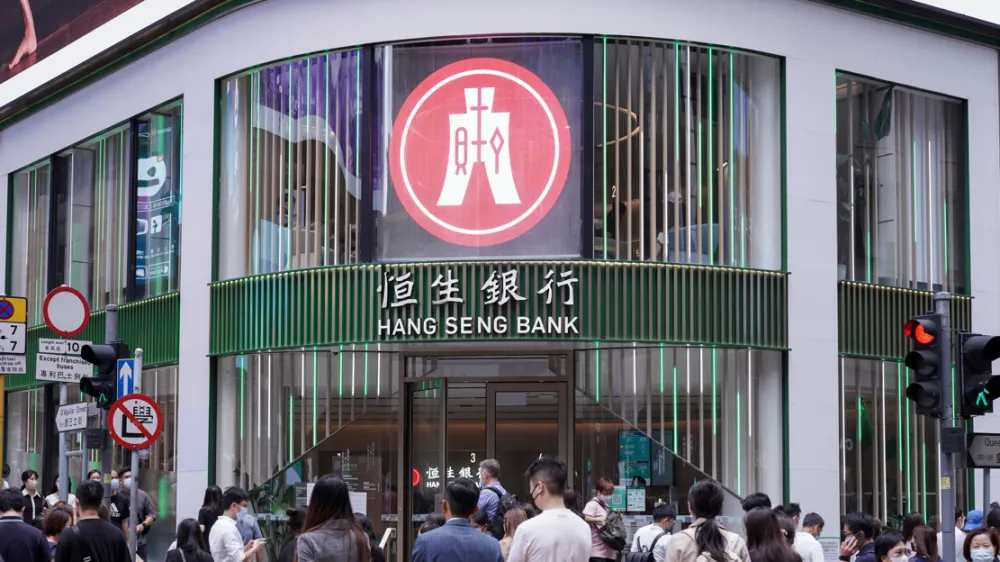
In Hong Kong, regulators have licensed stablecoin issuers that include The Hongkong and Shanghai Banking Corporation Ltd. and a venture involving Standard Chartered Bank (Hong Kong) Ltd. Both have announced plans to issue Hong Kong dollar-denominated stablecoins.
Benz said Japan's regulatory framework gives banks a central role in stablecoin issuance, boosting institutional trust but limiting competition from new entrants.
“Japan has chosen a high-trust, bank-intermediated model that reflects its financial culture,” he said. “More open frameworks from regulators encourage innovation but require heavier supervision. Each reflects the priorities of its own financial system.”


















 Read Here
 Advertise
 Sign Up