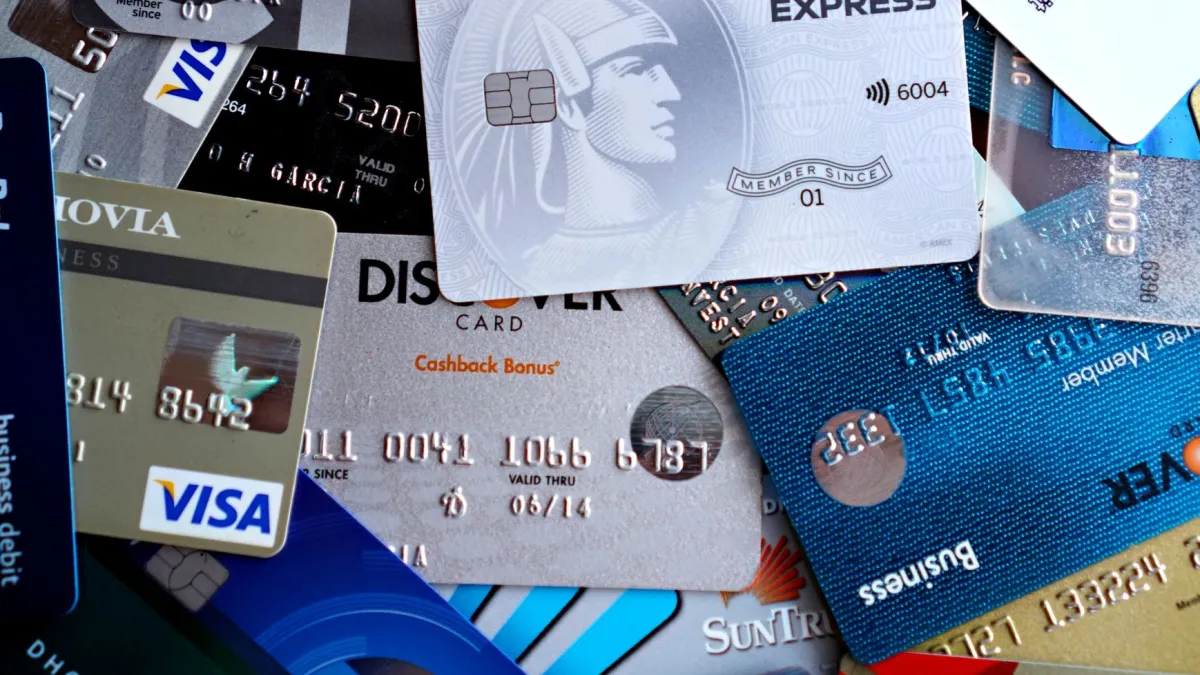
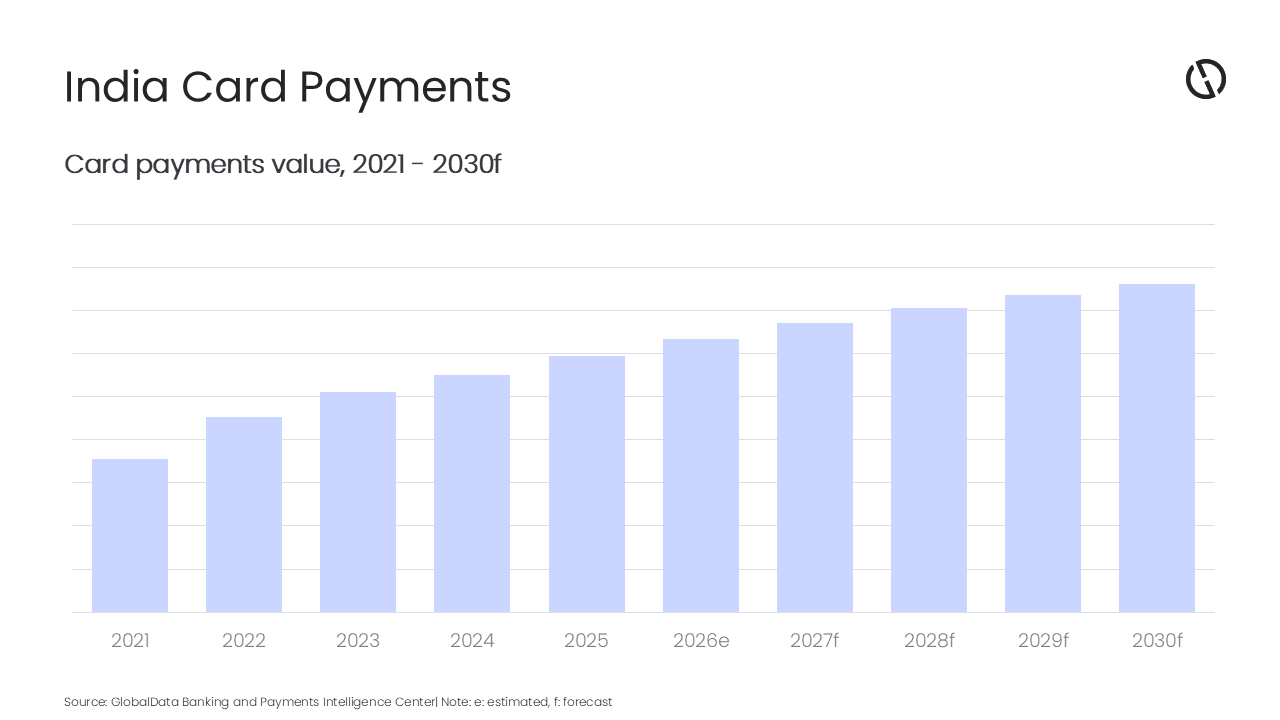
India card payments post five years of growth: GlobalData
Ecommerce expansion is supporting wider adoption of electronic payments in India.
India’s card payment value registered steady growth in the last five years, underpinned by a rising banked population and a shift from cash to electronic transactions, according to GlobalData’s Payment Cards Analytics.
As of August, over 590 million accounts and more than 410 million RuPay cards had been issued under the Pradhan Mantri Jan Dhan Yojana (PMJDY), highlighting the role of bundled debit cards in bringing first-time users into the formal financial ecosystem.
Debit cards remain the most widely held card type in India, supported by government and Reserve Bank of India-led inclusion efforts. PMJDY has driven this expansion by offering basic savings bank deposit accounts to low-income and rural populations with limited access to financial services.
Credit and charge card uptake remains comparatively low due to limited formal credit histories, high interest rates, debt concerns, and the presence of overdraft facilities.
However, consumers are increasingly adopting credit cards, attracted by reward points, discounts, instalment payment options, rising incomes, and targeted bank promotions.
The integration of credit cards with Unified Payments Interface (UPI) is expected to increase utilisation by enabling instant payments via widely used UPI QR codes, including at merchants that do not accept card payments through traditional POS infrastructure.
UPI-linked credit card acceptance and broader card issuance are expected to make cards more relevant in targeted areas, particularly ecommerce and higher-value spending, even as UPI-powered digital wallets have frequently bypassed cards for day-to-day transactions.
"Initiatives such as PMJDY and the JAM [Jan Dhan, Aadhaar, and Mobile] framework are expanding access to formal banking, while the Digital India Programme expansion is expected to improve the digital ecosystem, enabling wider use of electronic payment instruments," Ravi Sharma, Lead Banking and Payments Analyst at GlobalData said.
"However, despite progress in penetration, sustained efforts are still required to improve card access and strengthen acceptance infrastructure in underbanked region," he added.
Sharma said India's card payments trajectory will be determined by the continued expansion of financial inclusion, sustained investment in digital infrastructure, and innovation across both physical and virtual card products.














 Read Here
 Advertise
 Sign Up