, South Korea
1143 views
Photo by Pixabay.

South Korea names 10 domestic systemically important banks for 2025

They are required to log a 1% additional capital surcharge in 2025.

Ten financial firms– five bank holding companies and five banks– have been named domestic systemically important banks (D-SIBs) by South Korean regulators on 10 July.

Shinhan Financial Group, KB Financial Group, Hana Financial Group, Woori Financial Group, NH Financial Group, KB Kookmin Bank, Woori Bank, Shinhan Bank, KEB Hana Bank, and NH Bank have been identified as D-SIBs by the Financial Services Commission for 2025.

They will be required to log a 1% additional capital surcharge in 2025.
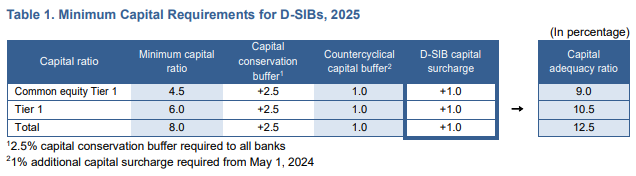
All ten firms have also been named as domestic systemically important financial institutions (D-SIFIs) and are required to prepare and submit their own recovery plans to the Financial Supervisory Service (FSS) within the next three months.


Follow the link s for more news on

Join Asian Banking & Finance community
Since you're here...

...there are many ways you can work with us to advertise your company and connect to your customers. Our team can help you design and create an advertising campaign, in print and digital, on this website and in print magazine.

We can also organize a real life or digital event for you and find thought leader speakers as well as industry leaders, who could be your potential partners, to join the event. We also run some awards programmes which give you an opportunity to be recognized for your achievements during the year and you can join this as a participant or a sponsor.

Let us help you drive your business forward with a good partnership!

Top News

JCB contactless payment launches in Taipei Metro
Contactless payments are now available across four of Taiwan’s major metro systems.
Cards & Payments
Mizuho and Bank of Baroda join forces on India M&A finance
The alliance also covers foreign exchange hedging and escrow support for transactions.
Middle East conflict threatens APAC banks with $180b losses
S&P says 92% of regional lenders still hold stable outlooks despite growing uncertainty.