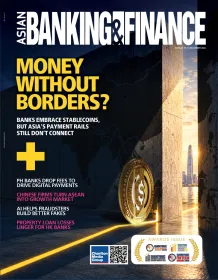
Philippine banks trade transfer fees for customer loyalty
Lower transfer costs could accelerate digital payments, but banks must turn higher usage into deposits, lending, and broader product adoption.
Philippine banks can sustain zero-fee transfers by using them to strengthen primary customer relationships rather than attempting to replace lost transaction income through higher payment volumes alone.
Lance Katigbak, Partner at Boston Consulting Group, said transfer fees represent a relatively small part of bank earnings compared with lending and deposits. The greater impact could fall on electronic money issuers and mobile wallets, where fees account for a larger share of the business.
For banks, removing fees could encourage customers to keep more money within one institution and subsequently use products such as debit cards and credit cards.
“Zero times however many transactions are still going to be zero,” Katigbak said. Higher volumes instead create value when customers deepen their overall banking relationship.
Dr. John Paolo Rivera, Senior Research Fellow at the Philippine Institute for Development Studies, said scale can spread fixed digital infrastructure costs across a larger customer base, but volume alone will not replace fee income.
Smaller lenders also face a scale disadvantage. Rivera said interoperability and efficient shared payment infrastructure will be critical to ensuring institutions of different sizes can compete. Katigbak added that shared infrastructure could help smaller banks continue serving rural and specialised customers.
Lower fees could meanwhile accelerate the shift from cash. Rivera said digital payments already accounted for more than half of Philippine retail payment volume in 2024 and 2025, with small-value transactions particularly sensitive to fixed charges.
Fees, however, are only part of the equation. Convenience, merchant acceptance, reliability, connectivity, cybersecurity, and fraud protection will also determine adoption.
The longer-term payoff will depend on whether higher payment activity translates into broader use of banking products.













 Read Here
 Advertise
 Sign Up








Commentary
The stablecoin conversation is missing the everyday user
Stablecoin payments are going mainstream. Hong Kong and APAC are showing how
Why digital assets are set to become mainstream in APAC
Bitcoin’s latest hacks expose where trust really sits in Asia
Singapore's next payments opportunity
DIFC's reforms open new doors for Asian businesses: Is yours ready?