High banking fees hinder Thailand’s financial inclusion
Virtual banks could disrupt costly banking norms.
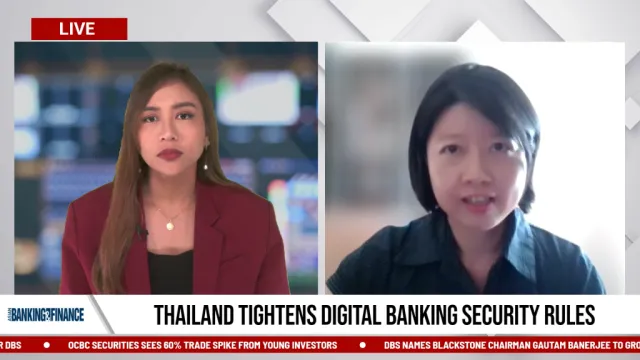
Rigid banking requirements in Thailand continue to prevent financial inclusion, with minimum balance rules and fees discouraging many from opening accounts. Virtual banks could be a game-changer in eliminating these financial barriers.
“The minimum account requirement is actually just a tip of the iceberg that many in the Thai economy are still facing,” said Dr. Chalee Asavathiratham, President of Lightnet Group and Senior Advisor of Lightnet-WeLab Consortium. “Having a requirement such as [maintaining] a balance of a few 1000 baht, or otherwise you'll be charged a monthly fee, actually produces hurdles for many people who have unstable incomes.”
These disproportionately impact Thailand’s informal workforce, including gig workers, online sellers, and solopreneurs, who often experience irregular income flows. “Because of these fees, many people may choose not to even put their money into the bank account,” Dr. Chalee added.
Virtual banks, which operate without physical branches, could introduce a more accessible model. Drawing lessons from Hong Kong, where digital banks disrupted the industry by eliminating minimum balance fees, Thailand could see similar benefits.
“Because of the lower cost, we're able to pass on the savings to the customers by offering products that are competitive in rates,” Dr. Chalee said.
Leveraging AI and alternative data, digital banks can also streamline services such as loan approvals. Moreover, Thailand’s financial system could also benefit from international models in fraud prevention.
“When Thailand opens up to virtual banks, new virtual bank competitions and new licenses, everybody would benefit,” Dr. Chalee said.



















 Read Here
 Advertise
 Sign Up








Commentary
Stablecoin payments are going mainstream. Hong Kong and APAC are showing how
Why digital assets are set to become mainstream in APAC
Bitcoin’s latest hacks expose where trust really sits in Asia
Singapore's next payments opportunity
DIFC's reforms open new doors for Asian businesses: Is yours ready?
Why Asia’s private wealth industry requires a new era of governance
APAC has mastered domestic payments. The next challenge is connecting them.
Why fragmented communications are becoming a hidden governance risk for Asia Pacific banks